Author name: White Corner Boxing Academy

Best Boxing Academy in bangalore
Blog

Benefits of Shadow Boxing

Benefits of Shadow Boxing Shadow boxing benefits go far beyond looking the part in front of a mirror. It’s the simplest tool in boxing, no gloves, no bag, no partner, and also one of the most underrated. Done with intent, it sharpens technique, builds conditioning, and trains your brain in ways bag work alone can’t. Done lazily, it’s just waving your arms in the air. Here’s a clear breakdown of the shadow boxing benefits that matter, and how to make sure you’re actually getting them instead of wasting the round. The real shadow boxing benefits Technique without distraction When you hit a bag, part of your attention goes to the impact. When you spar, most of it goes to not getting hit. Shadow boxing strips all that away. There’s nothing to react to, so you can focus entirely on how you move. That’s why coaches use it to clean up form. You can slow a combination down, feel where your weight sits, and check that your hand returns to guard after every punch. It’s the closest thing boxing has to practising in a lab. Footwork and movement Most beginners punch fine and move terribly. Shadow boxing forces you to deal with your feet, because there’s no bag anchoring you to one spot. You step in, pivot out, circle, reset. Over time your movement stops being an afterthought and starts feeling natural, which is exactly when boxing begins to click. Conditioning you can’t fake A few honest rounds will have you breathing hard. Kept at a real pace, shadow boxing builds cardio, burns calories, and trains the stop-start endurance the sport demands. It’s a big reason it shows up in nearly every warm-up and home workout, and why it pairs so well with boxing for fitness. Muscle memory that carries over Boxing runs on automatic responses. You don’t have time to think about throwing a counter mid-exchange, it has to be wired in. Shadow boxing is repetition without the fatigue of impact, so you can drill the same combination dozens of times and groove it into memory. When the moment comes on the bag or in sparring, the movement is already there. Anywhere, anytime, no excuses This is the practical one. You need zero equipment and about two square metres of space. A hotel room, a terrace, a corner of your bedroom, it all works. On days you can’t make it to the gym, a few rounds keep your skills sharp and your conditioning ticking over. Mental rehearsal This is the benefit most people skip. Good shadow boxing isn’t punching air, it’s fighting an imaginary opponent. You picture their jab, slip it, counter. You create angles and react to threats that aren’t there. That rehearsal builds timing and ring IQ, the part of boxing that separates someone who knows combinations from someone who can actually use them. How to shadow box properly The shadow boxing benefits only show up if you do it with intent. A few rules keep you honest: Stay in your stance. Hands up, chin tucked, the same guard you’d hold in a real round. Picture an opponent. Give yourself something to hit, slip, and counter. Don’t just flow through motions. Move your feet. Every combination should involve a step, a pivot, or an angle. Throw real punches. Snap them back to guard. No lazy, dangling arms. Work in rounds. Three minutes on, one off, so your conditioning gets the work too. The mistakes that waste the round Most people get little out of shadow boxing because they treat it as filler. They drop their hands, plant their feet, stare into space, and go through the motions until the timer ends. If your shadow boxing looks nothing like how you’d actually fight, it’s not building the habits you want, and careless reps quietly groove the same beginner mistakes you’re trying to avoid. Train it like it’s real, and it pays you back like it’s real. FAQs Is shadow boxing a good workout on its own? Yes, if you do it with intent. Several honest rounds will raise your heart rate, build conditioning, and burn calories. It won’t fully replace heavy bag work or sparring for power and timing, but as a standalone cardio and technique session, especially at home, it’s genuinely effective. How long should I shadow box? Start with 3-5 rounds of three minutes, with a minute of rest between them. That’s enough to build conditioning and drill technique without your form falling apart from fatigue. As you improve, add rounds or raise the pace. Quality beats quantity, since sloppy extra rounds just groove bad habits. Should I shadow box in front of a mirror? A mirror helps you check your guard, stance, and punch mechanics, so it’s useful for beginners cleaning up form. Don’t rely on it completely, though. Part of the value is visualizing an opponent and reacting, which you can’t do while watching yourself. Mix both. Can shadow boxing improve my actual boxing? Definitely. It builds muscle memory, footwork, and timing that carry directly into bag work and sparring. Many coaches rate it one of the most important drills in the sport. The catch is intent. Shadow boxing done carelessly builds careless habits, while focused practice sharpens everything. Do beginners benefit from shadow boxing? More than almost anyone. Beginners are forming the habits that shape their boxing for years. Shadow boxing lets beginners drill stance, guard, and combinations slowly and correctly, without the pressure of a bag or partner. A coach watching early on can fix issues before they harden.
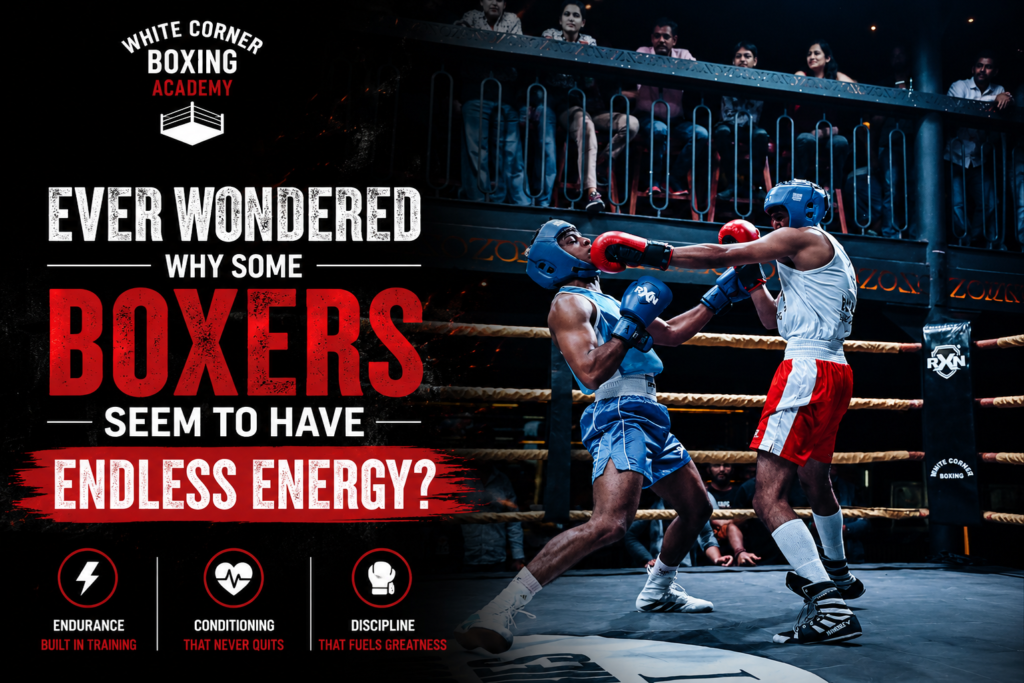
Boxer training through an intense round building endurance at a boxing gym in Bangalore
Blog

Ever Wondered Why Some Boxers Seem to Have Endless Energy?

Ever Wondered Why Some Boxers Seem to Have Endless Energy? Boxing for endurance in Bangalore isn’t about who’s born with more stamina. Watch a trained fighter go hard for three minutes, rest for sixty seconds, then repeat it ten times without gassing out, and it almost looks unfair. It isn’t genetics. It’s a built energy system, and the methods behind it are completely learnable. The “endless energy” you see in good boxers comes down to a handful of specific things. None of them are secrets. They’re just rarely trained properly outside a real gym. It’s trained energy systems, not luck Your body runs on three energy systems. One fires for explosive, all-out effort lasting a few seconds, like a sharp combination. The second covers sustained high intensity, roughly the length of a round. The third is aerobic, the slow-burning system that recovers you between bursts. Most people only ever train one of these, usually badly. Boxers train all three, and they train them in the exact pattern the sport demands: hard burst, short recovery, repeat. That’s why a conditioned boxer can empty the tank in round one and still have something left in round eight. The system that refills the tank has been built on purpose. Efficient technique wastes far less energy Here’s the part beginners always underestimate. Two boxers can throw the same number of punches, and one will be wrecked while the other is barely winded. The difference is efficiency. A beginner tenses their whole body, holds their breath, and throws punches with their arms. It’s like driving with the handbrake on. A trained boxer stays loose, generates power from the legs and hips, and only tightens at the moment of impact. Same output, a fraction of the cost. This is why technique and stamina aren’t separate things. Better technique is better endurance. A coach fixing your form is quietly building your gas tank at the same time, which is one of the things that happens when you start boxing properly. Breathing is the hidden engine Almost nobody breathes correctly when they start. They hold their breath through combinations, then gasp for air. Holding your breath under exertion spikes your heart rate and drains you fast. Trained boxers exhale sharply with each punch and breathe in a steady rhythm the rest of the time. It sounds minor. It’s actually one of the biggest gaps between someone who fades after two rounds and someone who paces through ten. Rhythmic breathing keeps oxygen moving to the muscles that need it, and it keeps you calm, which matters more than people expect. The conditioning behind the calm Panic burns energy faster than punching does. A nervous beginner under pressure tenses up, breathes shallow, and exhausts themselves in about a minute. A conditioned boxer stays composed because they’ve been there hundreds of times in training. That calm isn’t a personality trait. It’s repetition. Coaches build it deliberately, adding controlled pressure in rounds so your body learns that fatigue and discomfort aren’t emergencies. Over time, the same intensity that used to wreck you barely registers. How you build the same endurance The good news is none of this needs elite genetics. Boxing for endurance in Bangalore gets built through the same repeatable work any committed beginner can do: Round-based training. Working in 3-minute rounds with short rests, so your body adapts to the sport’s real rhythm. Skipping and footwork. Cheap, brutal, and one of the best conditioning tools in the sport. It’s a backbone of smarter boxing conditioning. Bag and pad work. Sustained output that builds technique and stamina at the same time. Progressive intensity. A coach slowly raising the demand as you adapt, instead of burning you out on day one. Do this consistently for a couple of months and the change is obvious. The first round stops feeling like a sprint. You recover faster between efforts. The “endless energy” you used to envy starts showing up in your own training. FAQs How long does it take to build boxing endurance as a beginner? Most beginners feel a clear jump in stamina within 4-6 weeks of training two to three times a week. The first round stops feeling like a sprint, and recovery between efforts improves. Full conditioning keeps developing for months, but early gains come fast because beginners start with so much room to improve. Do I need to be fit before starting? No. Boxing builds the fitness as you go. Coaches scale intensity to your current level, so you’re never thrown into the deep end. Plenty of beginners start unable to skip rope for thirty seconds and are doing full rounds within a couple of months. Starting unfit is normal, not a barrier. Is boxing better for stamina than running? They build different things. Running develops a strong aerobic base. Boxing develops that plus the explosive, stop-start endurance the sport demands, along with technique and coordination. For most people boxing is also more engaging, which means they actually stick with it. Consistency beats the “better” workout you quit. Why do I gas out so fast when I start boxing? Almost always technique and breathing. Beginners tense up, hold their breath, and punch with their arms instead of their body. That wastes huge amounts of energy. As your form improves and your breathing steadies, the same workout costs far less. Gassing out early is a sign of inexperience, not bad genetics. Can boxing endurance training help with everyday energy levels? Yes. The same conditioning that powers a boxer through rounds improves your resting heart rate, recovery, and overall stamina in daily life. Many people who start boxing for fitness notice they’re less winded on stairs, sleep better, and feel sharper through the workday within a few weeks.

Best boxers in bangalore
Blog

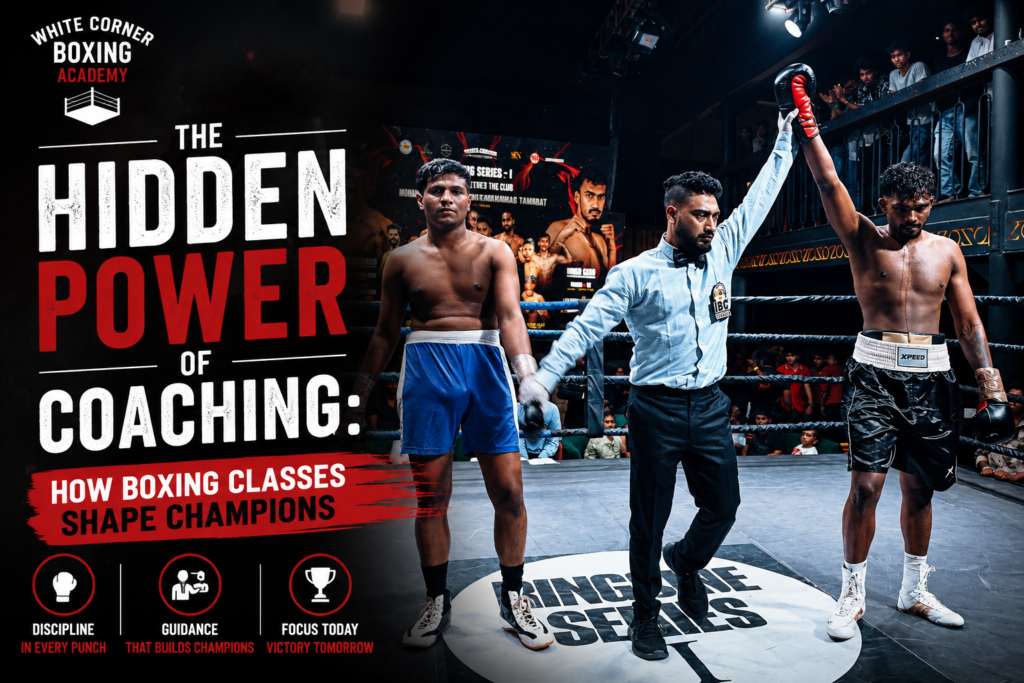
The Hidden Power of Coaching: How Boxing Classes Shape Champions

The Hidden Power of Coaching: How Boxing Classes Shape Champions Boxing coaching in Bangalore mostly happens off-camera. Bag work looks good in reels. Sparring rounds get filmed. But the thing that actually turns a beginner into a boxer, a stance correction at minute 14, a quiet word about your back foot drifting on hooks, never makes the highlight reel. That’s where the real work lives, and it’s why a self-taught year of boxing rarely matches a coached three months. Most beginners think boxing is about hitting hard. It isn’t. It’s about hitting correctly, and almost nobody figures that out alone. What a real boxing coach actually does A good coach is doing three things at once while you train. The first is catching what you can’t see. Your stance drifts when you get tired. Your guard drops after every cross. Your back foot lifts on hooks. You won’t notice any of it. The coach will, and it gets fixed in real time before muscle memory turns it into a habit you’ll spend months unlearning. The second is sequencing your training. Footwork before power. Defence before offence. Jab before combinations. Self-taught boxers skip steps and plateau. Coached boxers keep climbing because they’re built in the right order, which is also how they sidestep the common beginner mistakes that quietly cap progress in the first six months. The third is calibrating intensity. Knowing when to push you into a harder round, and when to ease off, is the part most beginners never notice. Overtraining is the fastest route to quitting. A coach reads your body language and adjusts the day’s plan around it. Coaching shapes the mind, not just the punches The physical side of boxing is the easy part to teach. The harder part, and the part that actually shapes champions, is mental. Staying composed when someone’s coming forward. Keeping your hands up when you’re exhausted and every instinct says to drop them. Thinking clearly in round three when your lungs are on fire. None of that is natural. You build it slowly, under a coach who knows when to add pressure and when to let you find your feet. This is why competitive boxers and nervous beginners actually need the same thing: someone watching closely enough to know what you can handle next. A good coach is half technician, half psychologist, reading your mindset as carefully as your footwork. Why coach credentials matter When you’re comparing boxing coaching in Bangalore, the first question isn’t about equipment or location. It’s who’s running the class. Real coaches have either competed at a high level or trained boxers who have, and usually both. Those titles aren’t decoration. They translate directly into what a coach can spot and fix in your form. At White Corner Boxing Academy, Founder and Head Coach Dipan Rai brings over 15 years of competitive boxing and 8 years of coaching, with more than 1,000 boxers trained, including state and national champions. He picked up the “Best Scientific Boxer” award at the Karnataka State Championship as a fighter himself. The wider team includes Khelo India Youth Games gold medallists and All India national-level competitors, and the academy is affiliated with the Karnataka Amateur Boxing Association. One detail tells you more than the medals do: the academy runs a dedicated video analysis setup for breaking down technique. Coaching that records your rounds and reviews them frame by frame is coaching that takes your progress seriously. That’s rare, and it’s exactly the kind of thing worth looking for. None of this guarantees a gym is right for you. It does mean the corrections you get in a beginner class come from people who’ve fought at the level they teach. How to spot real coaching when you visit a gym You don’t need to be an expert to judge a class. When you walk in for a trial, watch the coaching, not the equipment: Is the coach correcting form mid-class, or just calling combinations from the side? Do beginners get different instruction from intermediates, or is everyone running the same drill? Does the coach demonstrate technique properly, or only describe it? Is anyone tracking your progress between sessions, or are you on your own? The equipment can be average. The coaching can’t. A great coach in a basic gym will take you further than a poor one in a fancy facility, every single time. FAQs How long does it take to see progress with proper boxing coaching? Most beginners notice clear improvements in stance, footwork, and combinations within 4-6 weeks of training twice a week. Real technical fluency builds over 4-6 months. The gap shows up most around month two: self-taught boxers tend to plateau, while coached boxers keep climbing because their habits were built right from the start. Do I need a coach if I just want fitness, not competition? Yes, arguably more than competitors do. Untrained boxing leads to sloppy form, shoulder strain, and workouts that stop producing results. A coach keeps every session safe and effective, which is exactly what most fitness-focused beginners actually want, even if they don’t realise it on day one. What makes WCBA’s boxing coaching in Bangalore different from a regular gym? Founder Dipan Rai’s competitive background, plus a coaching team of state and national champions across two branches in HSR Layout and Koramangala. Coaches who’ve actually fought see things fitness trainers miss: small posture issues, weight transfer errors, defensive gaps. Add a dedicated video analysis setup, and that’s a real difference in how progress gets tracked. Should I train one-on-one or join group boxing classes? Group classes are usually enough for the first 6-12 months, especially when the coach corrects you individually within the session. One-on-one helps later, when you’re refining specific weaknesses or preparing for competition. Most beginners overspend on private training too early. Start with group classes and add private sessions only when you hit a clear wall. Can a good coach really help more than YouTube tutorials? Yes, by a wide

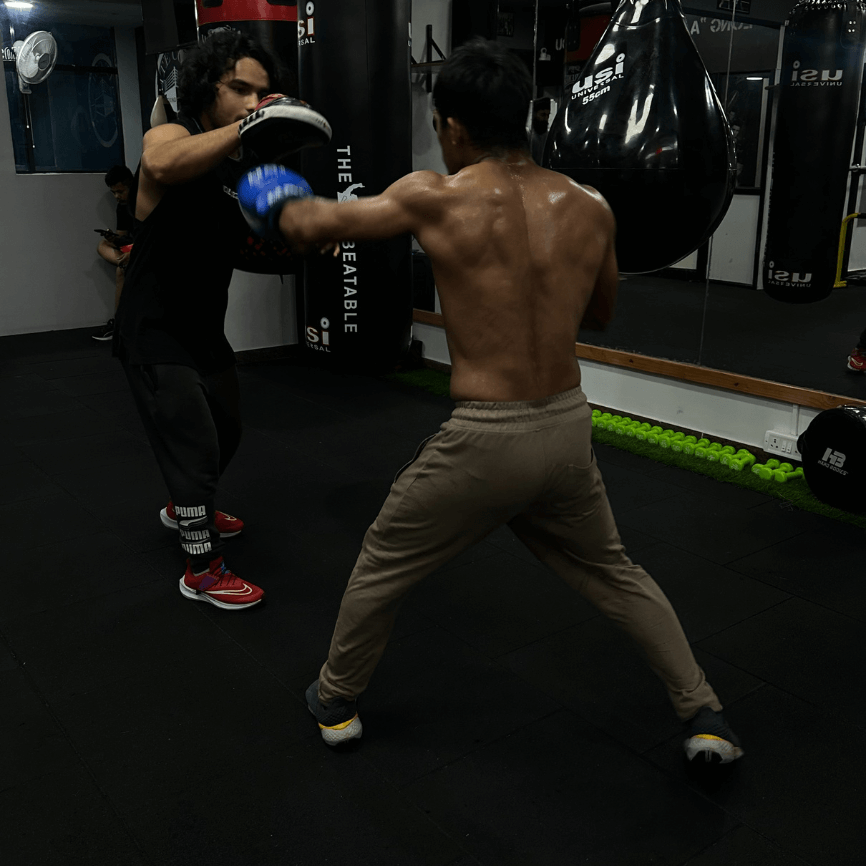
Boxing coach in Bangalore correcting a trainee's stance and punch form during a coaching session
Blog

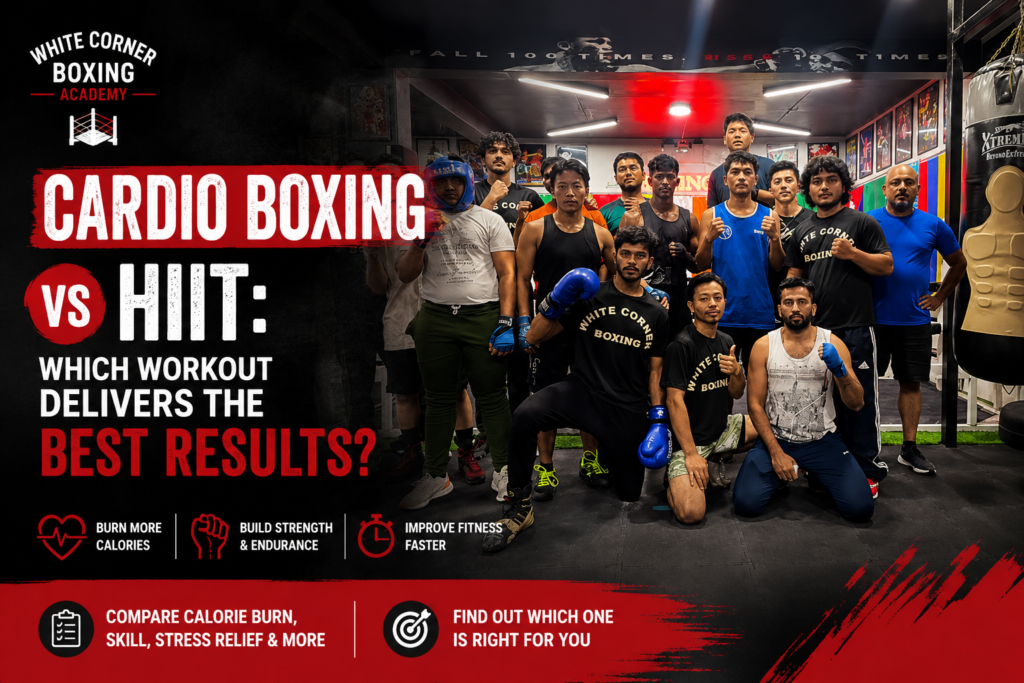
Cardio Boxing vs HIIT: Which Workout Delivers the Best Results?

Cardio Boxing vs HIIT: Which Workout Delivers the Best Results? Both are intense. Both burn calories. Both promise results in less time than a steady-state run. The honest question for most working professionals isn’t which is “better” in a lab — it’s which one you’ll actually stick with twice a week for six months.Here’s the practical breakdown. What each one actually is HIIT is a structure, not a movement. Short bursts of all-out work (20-40 seconds) followed by brief rest (10-30 seconds), repeated for 20-30 minutes. Exercises rotate — burpees, sprints, jump squats, mountain climbers. It’s brutal, simple, and doesn’t require a trainer. Cardio boxing is also structured around intervals — but the work is punching combinations, footwork, and bag and pad drills. Three-minute rounds, 60-second rest. You’re learning a skill while your heart rate stays in the same zones HIIT pushes. Where they’re roughly the same Calorie burn. Both put most adults in the 500-700 kcal range for a 45-60 minute session. Cardio adaptation. Both improve VO2 max and resting heart rate within 4-6 weeks of consistent training. Fat loss. Both work, assuming nutrition is in order. Neither is magic. Where cardio boxing pulls ahead Skill keeps you engaged. HIIT plateaus mentally fast — you’re doing burpees again. Cardio boxing has technique progression, so every class teaches you something. People show up more often. Posture and core work. Every punch is a rotational core movement that builds obliques and mid-back. If you sit 8+ hours a day, that matters more than calories. Stress release. Hitting a heavy bag does something for stress that burpees don’t. Most beginners feel it from session one. Lower injury rate. Unsupervised HIIT at home is a common source of fitness injuries. Coached boxing classes in Bangalore are safer for most adults. Where HIIT pulls ahead No coach needed. You can do HIIT in a hotel room or a 4×4 metre space at home. Boxing needs equipment and ideally a coach. Pure time efficiency. A 20-minute HIIT session can replicate most of the cardiovascular benefit of a 60-minute class. If lunch breaks are your only window, HIIT wins. No learning curve. You can start hard on day one. Boxing has a 2-3 week stance and footwork phase before classes feel smooth. The honest verdict If you have 20 minutes, no coach, and no equipment — do HIIT. It works. If you have 60 minutes and you’re choosing what to commit to for the next six months, boxing for fitness wins on sustainability. The skill progression, stress release, and posture benefits compound on top of the cardio work. Most people quit HIIT because it gets boring. Almost nobody quits boxing for that reason. Can I do both cardio boxing and HIIT in the same week? Yes. A common split is 2 cardio boxing sessions and 1 HIIT session weekly. Leave a rest day between high-intensity sessions and don’t stack both on the same day. Which burns more calories — cardio boxing or HIIT? Per minute, HIIT edges slightly ahead because there’s no skill component slowing the pace. Per full session, they’re roughly equal — both land in the 500-700 kcal range at moderate-to-high intensity. Is cardio boxing good for beginners? Yes. Beginner classes focus on stance, footwork, and basic combinations on bags or pads. No sparring, no contact. A good coach scales the intensity so you progress without burning out. More on this in our guide on whether boxing is safe for beginners. Will I lose weight faster with HIIT or boxing? Neither is faster if your calorie deficit is the same. Weight loss comes from diet plus consistency. Both support fat loss equally well — the deciding factor is which one you’ll actually keep doing. How many cardio boxing classes a week to see results? Two sessions per week is the minimum for visible posture and cardio improvements within 4-6 weeks. Three sessions accelerates fat loss and skill. More than four gets diminishing returns without proper recovery.

Group boxing class in Bangalore with office professionals training in proper stance at White Corner Boxing Academy
Blog

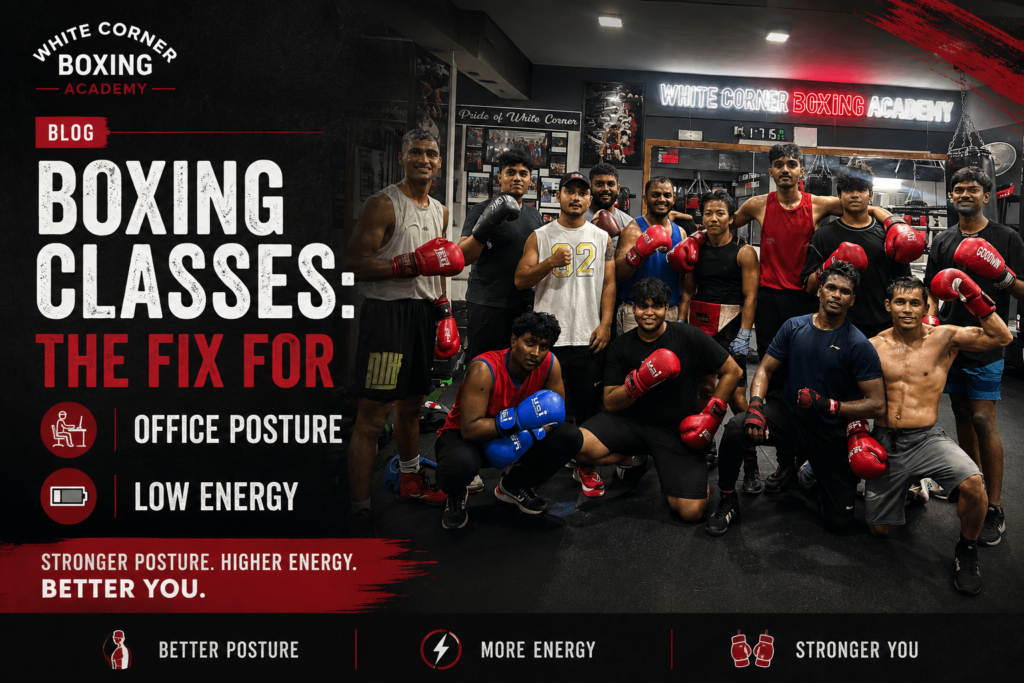
Boxing Classes: The Fix for Office Posture and Low Energy

Boxing Classes: The Fix for Office Posture and Low Energy Eight hours at a desk does something specific to a body. Shoulders roll forward. The head drifts toward the monitor. Hip flexors shorten. Glutes switch off. By 4 PM, the coffee isn’t hitting the way it used to, the lower back has a familiar ache, and the idea of going to a gym after work sounds like one more thing to fail at. This is the daily reality for most office workers in Bangalore — especially anyone working in IT, consulting, or startups. The slouch isn’t dramatic. It’s slow. You don’t see it happening, but it shows up in stiff necks on Monday morning and a foggy 4 PM that no productivity hack fixes. Boxing classes in Bangalore fix a surprising amount of it. Not because boxing is trendy, but because of what the sport physically demands of your body for 60 minutes. This piece breaks down why. What sitting 8+ hours a day actually does to your body Most desk-related damage isn’t injury. It’s adaptation. Your body gets very good at the position you spend the most time in. That position, for most office workers, is hunched. The slouch you don’t notice anymore Your chest muscles tighten. Your upper back muscles get long and weak. Your head sits forward of your shoulders instead of stacked over them. Every inch your head moves forward adds roughly 4-5 kg of load on your neck. By the end of a workweek, your traps are doing eight hours of overtime they were never designed for. Why your energy crashes by 4 PM Sitting isn’t just bad for posture. It’s bad for circulation, lymphatic flow, and the small postural muscles that should be firing all day. When those switch off, your body runs on shallow breathing, low blood flow, and minimal movement. The 4 PM crash is partly a sugar dip, but it’s mostly that you’ve been physically idle for hours. A workout that re-engages everything the chair turned off is the fix. Most workouts don’t do that. Boxing does — which is one reason boxing for fitness in Bangalore has taken off with working professionals over the last few years. Why boxing is built for desk workers Boxing wasn’t designed as office-recovery training, but it works that way by accident. Here’s what’s actually happening when you train. The boxing stance is a posture reset The first thing a coach corrects in a beginner class is your stance. Feet shoulder-width, knees soft, hips square, ribs down, chin tucked, hands up, shoulders relaxed but engaged. Hold that for a few rounds and your body remembers what neutral spine feels like. Most people haven’t been in that position for years. You’re not stretching. You’re practising the opposite of the slouch, under load, for 45-60 minutes. That’s far more effective than the five minutes of desk stretches you keep meaning to do. It hits the muscles your chair turns off Every punch comes from the hips and the back, not the arm. A proper cross rotates the back foot, fires the glute, twists the core, and drives through the shoulder blade. That sequence wakes up the exact chain — glutes, obliques, mid-back, rear delts — that goes quiet during a workday. Add the footwork, and you’ve also moved laterally, backward, and forward in patterns your office floor never asks for. Hip mobility improves. Ankles get stronger. The body remembers it’s a body. This is also why boxing circuit training and conditioning work so well alongside skill drills — they reinforce the same posterior chain office work disables. 60 minutes that fix what coffee can’t A standard class is intense enough to flood the system with adrenaline and endorphins. That’s not motivational language — it’s what happens. You walk in foggy and stiff. You walk out clear-headed and looser. The energy boost isn’t temporary in the way caffeine is. Sleep improves. The next morning starts better. Within a couple of weeks, the 4 PM crash starts to soften. This is the part most desk workers don’t expect: the recovery from a hard class often gives you more usable energy than skipping the workout would have. If you’ve ever wondered why boxing classes feel so good after work, this is the mechanism. What a class actually looks like If you’ve never trained, the picture in your head is probably wrong. There’s no sparring on day one. Nobody throws you in a ring. A typical session at White Corner Boxing Academy runs in this rough order: Warm-up (10-12 min): Skipping, mobility drills, dynamic stretches. Mostly to get blood moving and joints ready. Technique work (15-20 min): Stance, footwork, basic punches — jab, cross, hook, uppercut. Coaches walk around correcting. Bag work or pad work (15-20 min): You throw combinations on heavy bags or with a trainer holding focus mitts. This is where the cardio hits. Conditioning (5-10 min): Core, plyometrics, or circuit-style finishers. Cooldown: Stretching, mobility, breathing. There’s no music-pumped fake intensity. Nobody’s yelling at you. Just structured work, a coach watching your form, and a clear progression session to session. If you want a fuller breakdown of what happens when you start boxing, we’ve covered the first few weeks in detail elsewhere. How to start if you’ve never thrown a punch Don’t buy gloves before your first class. Most gyms, including ours, provide everything you need for a trial — gloves, wraps, bag space. All you need is workout clothes and a water bottle. A few practical things to know going in: Eat something light 60-90 minutes before. Banana, toast, a handful of nuts. Don’t train on a heavy meal or empty. Skip the ego. The first class is for learning, not for being good. Coaches care about whether you’ll show up next week, not whether you punch hard. Expect to be sore in places you forgot you had muscles. Mid-back, obliques, calves, glutes. That’s the chair muscles waking up. Show up twice a week minimum for the

Professional boxing bout inside a boxing ring at White Corner Boxing Promotions, showcasing competitive fighters during a regulated boxing event in Bangalore.
Blog

Can Throwing Punches Really Help Your Mind?

Have you ever felt so stressed or anxious that you just wanted to hit something (safely, of course)? You’re not alone. Many people are discovering that stepping into a boxing class is about much more than fitness – it’s a powerful way to support mental health. In fact, research shows that boxing can help reduce symptoms of anxiety, depression, and stress by providing a healthy outlet for emotions and boosting overall well-being. Why Does Boxing Make You Feel Better? Let’s get interactive: Think about the last time you felt overwhelmed. Did you notice your body tensing up, your mind racing, or your energy dropping? Now, imagine channeling all that tension into a series of focused punches and footwork. That’s the magic of boxing. Non-contact boxing, which is the focus of most group classes, offers a cathartic release of anger, aggression, and stress. The combination of punching drills and conditioning exercises not only improves your physical health but also triggers the release of endorphins – your body’s natural mood boosters. This helps lower stress hormones and leaves you feeling calmer and more in control. The Science Behind Boxing and Mental Health Did you know that regular participation in boxing can lead to long-term improvements in mental health, including reduced levels of chronic stress, anxiety, and depression?  Studies highlight that the discipline and focus gained from consistent training can translate into other areas of life, helping you manage daily challenges with more resilience . Boxing also acts as a form of moving meditation. The intense focus required for combinations and footwork shifts your attention away from worries and into the present moment. Many people describe their time in boxing classes as a break from daily stress, where nothing else matters except the rhythm of movement and breath. Real Stories: Boxing as a Mental Reset It’s not just science  -real people are experiencing real change. One participant shared, “Boxing helps me feel in control of my emotions. Even on my worst days, I leave class feeling lighter and more confident.” This sense of empowerment is echoed by many who join boxing classes, where the supportive community and structured routines help build resilience and self-esteem. If you’re looking for a supportive environment, many gyms – including those offering boxing classes in Bangalore – focus on both physical and mental well-being. At White Corner Boxing Academy, for example, trainers encourage members to use boxing as a healthy outlet for stress and emotional release, making it easier to stay motivated and connected. Ready to Try Boxing for Your Mind? If you’re searching for a way to manage anxiety, lift your mood, or simply feel more in control, boxing could be your answer. Whether you’re a beginner or a seasoned athlete, boxing classes offer a safe, supportive space to channel your energy, build confidence, and boost your mental health. The combination of expert coaching, group motivation, and a welcoming environment makes these classes a great choice for anyone looking to fight back against stress and low mood. Why not give it a try? You might be surprised at how much lighter you feel—both in body and mind – after a single session. And if you’re in the city, boxing classes in Bangalore like those at White Corner Boxing Academy are ready to welcome you.

Professional boxer celebrating victory inside the ring at a White Corner Boxing Promotions event, surrounded by coaches, athletes, and supporters in Bangalore.
Blog

Boxing Classes: The Fix for Office Posture and Low Energy

If you spend your days hunched over a laptop, you’re not alone. Office workers are all too familiar with stiff shoulders, aching backs, and that afternoon energy crash. But what if there was a way to fix your posture, boost your energy, and get fit – all at once? Enter boxing classes, a dynamic solution that’s helping professionals transform their workday wellness. Why Office Workers Need More Than Just a Walk Sitting for hours can wreak havoc on your posture. Over time, your shoulders round forward, your core weakens, and your lower back starts to complain. This isn’t just uncomfortable – it can lead to chronic pain and even impact your productivity. While a quick walk or stretch helps, it often isn’t enough to undo the effects of a sedentary lifestyle. That’s where boxing classes come in. Boxing is a full-body workout that targets the very muscles office workers neglect. Every punch, slip, and duck engages your core, opens up your chest, and strengthens your back. The result? Better posture, improved mobility, and a body that feels more balanced and energized. The Science: How Boxing Improves Posture and Energy Boxing isn’t just about throwing punches – it’s about movement, coordination, and strength. When you join boxing classes you’ll notice that every session includes dynamic warm-ups, footwork drills, and core exercises. These movements counteract the effects of sitting by: Activating your core: Strong abs and obliques support your spine and help you sit taller at your desk. Strengthening your upper back: Punching and defensive moves build the muscles that pull your shoulders back, fighting that slouched look. Improving flexibility: Regular stretching and mobility work in boxing classes help loosen tight hips and hamstrings, common issues for office workers. And let’s not forget the energy boost. Boxing is high-intensity, which means it gets your heart pumping and your blood flowing. After a session, most people report feeling more alert, focused, and ready to tackle the rest of their day. Real Results from Boxing Classes in Bangalore Many professionals who’ve joined boxing classes in Bangalore at places like White Corner Boxing Academy rave about the difference it’s made. Members highlight not just the physical benefits, but also the mental clarity and stress relief they experience after each class. According to recent reviews, the expert trainers and supportive community make it easy for beginners to get started and stay motivated . Flexible class timings – early mornings and evenings – mean you can fit a workout around your work schedule. Whether you’re a complete beginner or looking to level up your fitness, there’s a class for you. And let’s not forget the energy boost. Boxing is high-intensity, which means it gets your heart pumping and your blood flowing. After a session, most people report feeling more alert, focused, and ready to tackle the rest of their day. Real Results from Boxing Classes in Bangalore Many professionals who’ve joined boxing classes in Bangalore at places like White Corner Boxing Academy rave about the difference it’s made. Members highlight not just the physical benefits, but also the mental clarity and stress relief they experience after each class. According to recent reviews, the expert trainers and supportive community make it easy for beginners to get started and stay motivated . Flexible class timings  -early mornings and evenings  -mean you can fit a workout around your work schedule. Whether you’re a complete beginner or looking to level up your fitness, there’s a class for you. Tips for Office Workers Starting Boxing Start slow: If you’re new to boxing, look for beginner-friendly classes that focus on technique and form. Be consistent: Aim for two to three sessions a week to see real improvements in posture and energy. Listen to your body: Let your coach know about any aches or pains so they can help you modify exercises as needed. Stay hydrated and fuel up: Good nutrition and hydration will help you recover faster and feel your best. Ready to Stand Tall and Feel Energized? If you’re tired of feeling stiff and drained by the end of the workday, it’s time to try something different. Boxing classes offer a fun, effective way to fix your posture, boost your energy, and build lasting strength. With expert coaching, a motivating community, and flexible schedules, you’ll find it easier than ever to make fitness a part of your routine. Step away from your desk and into the ring – your body (and your boss) will thank you!

Blog

Ever Wonder Why Boxing Classes in Bangalore Feel So Good After Work?

It’s 7 PM, your inbox is overflowing, and your shoulders are tense from hours at your desk. You could scroll your phone or binge another show  -or you could step into a boxing class and punch your stress away. More and more people are discovering that boxing classes are the ultimate way to shake off the day’s worries and recharge for tomorrow. What Makes Boxing Such a Powerful Stress Reliever? Let’s start with the science. A 2022 review published in the Journal of Psychiatric Research found that non-contact boxing exercises, especially in group settings, led to significant reductions in anxiety, depression, and stress symptoms. Participants reported improved mood, better concentration, and a cathartic release of tension after each session . But why does boxing work so well? It’s all about the combination of high-intensity movement and mindful focus. During boxing classes in Bangalore, you’re not just moving your body – you’re channeling your energy, focusing on technique, and letting go of the day’s frustrations with every punch. This blend of HIIT (high-intensity interval training) and mindfulness is proven to boost mood and lower stress hormones. The Numbers Don’t Lie: Boxing and Mental Health Did you know that a cross-sectional analysis of over 1.2 million Americans found those who engaged in boxing exercises reported a 20.1% lower mental health burden compared to those who didn’t exercise at all?  That’s a huge difference  – one that’s echoed in gyms across Bangalore, where members say they feel calmer, more focused, and more confident after class. And it’s not just about stress. According to the Cleveland Clinic, boxing can also reduce symptoms of anxiety and depression, improve sleep, and boost overall well-being . The physical benefits – like improved heart health, strength, and endurance, are a bonus, but it’s the mental clarity and emotional release that keep people coming back. What Happens in a Boxing Class That Melts Stress? If you’ve never tried boxing classes cities like  Bangalore before, here’s what you can expect: A warm-up to get your body moving and your mind off work Punching drills, bag work, and footwork that demand your full attention Short bursts of intense activity, followed by mindful recovery and deep breathing A supportive group atmosphere where everyone’s working toward the same goal White Corner Boxing Academy, a favorite among locals, is known for its welcoming environment and expert trainers who help you focus on technique and enjoy the process. Many members say that the sense of community and encouragement is just as important as the workout itself. What’s Your Go-To Stress Buster? Have you ever noticed how your mood shifts after a tough workout? What if, instead of carrying your stress home, you could leave it on the heavy bag? That’s the magic of boxing classes in Bangalore, they turn stress into strength, one punch at a time. Ready to Try Boxing for Stress Relief? If you’re searching for a healthy, effective way to unwind after a long day, boxing classes might be your perfect match. The combination of physical exertion, mental focus, and social support is hard to beat. And with gyms like White Corner Boxing Academy offering beginner-friendly sessions, there’s never been a better time to give it a try. So, next time you feel the pressure building, ask yourself: Would you rather carry your stress, or punch it away?

Blog

Ever Wondered Why Functional Training Is a Game-Changer in Boxing?

Ever watch a skilled boxer glide, pivot, and fire crisp combinations without wasting movement? That fluid power comes from training the entire body to work as one system. Functional training builds that system, and you’ll see it in modern programs worldwide, including Boxing classes in Bangalore. What is functional training? Functional training focuses on movement patterns that carry over to sport and daily life – squatting, hinging, pushing, pulling, rotating, and stabilizing. Instead of isolating a single muscle, it trains chains of muscles to coordinate force, absorb impact, and maintain posture under fatigue. For boxing, that means efficient footwork, sharp rotation through the hips and trunk, and a core that anchors every strike and slip. Why boxers rely on it Power from the ground up: Punches begin at the feet, travel through the legs and hips, and finish at the knuckles. Functional drills teach you to sequence that power so more of it reaches the target. Balance and control: Quick cuts, slips, and rolls demand precise weight shifts. Unilateral work (single-leg or single-arm) improves symmetry and control. Injury resilience: Strong hips, mid-back, and deep core muscles protect shoulders and lower back during long rounds of bag work and pads. Late-round quality: Functional circuits build fatigue resistance, keeping technique clean as the clock winds down. Functional Exercises That Translate to the Ring Rotational medicine ball throws: Train hip-to-shoulder power for hooks and crosses. Kettlebell swings: Develop explosive hip drive and posterior-chain endurance. Landmine press and landmine rotations: Build punch-specific angles with core engagement. Sled pushes/pulls: Reinforce whole-body drive and stance integrity. Turkish get-up: Improve shoulder stability, hip mobility, and body awareness. Anti-rotation core (Pallof press, dead bug with band): Protect the spine and steady the trunk during strikes and bumps. Agility ladder with shadowboxing: Link footwork patterns to upper-body rhythm. A Sample Functional Boxing Circuit (30–35 minutes) Perform 40 seconds on, 20 seconds off. Complete 3–4 rounds; rest 90 seconds between rounds. Rotational med-ball throw (right), then (left) Kettlebell swing Landmine press (alternating) Sled push or heavy march Pallof press (hold and breathe) Shadowboxing with defensive slips and pivots Key Coaching Tips Focus on driving from your feet with every punch. Rotate your hips and core together, then return to your guard. Exhale with each strike to keep your core stable and shoulders relaxed. Prioritize clean, controlled reps over speed. How to Add Functional Training to Your Week Include two functional sessions alongside your regular boxing or pad work. Schedule strength-focused days away from your toughest sparring or conditioning. Start with mobility drills and finish with core stability work. Where to Find Functional Training Many gyms now blend functional training with boxing skills. You’ll see this approach in several programs, including Boxing classes in Bangalore that offer movement-based circuits and integrated footwork. At White Corner Boxing Academy, coaches combine functional drills with pad rounds to build both strength and technique. Ready to Try It? Join a class that mixes boxing skills with functional training. Ask your coach how their sessions support better movement and core strength. When you see Boxing classes  featuring functional training, you’ll understand why boxers value it for power, balance, and results.

Blog

Boxing for Kids: Discipline, Fitness & Fun in Every Punch

If you’ve ever watched a group of kids in a boxing class, you’ll see more than just punches and footwork. There’s laughter, teamwork, and a sense of accomplishment that goes far beyond the ring. Across India – and especially in cities like Bangalore – boxing classes in Bangalore are becoming a favorite for families who want their children to grow up strong, confident, and healthy. Building Discipline and Focus Boxing is about more than just physical skills. Coaches teach kids to listen, follow instructions, and respect their peers. Each session starts with a warm-up and ends with a cool-down, reinforcing routines and self-control. Kids quickly learn that progress comes from practice and patience. They set goals, celebrate small wins, and discover the value of perseverance – skills that carry over into school and life. As one parent shared after enrolling their child, “We came to boxing in search of an activity to help my son build esteem, confidence, respect, discipline, and active listening. I can honestly say this is the best thing I have ever invested in for my son. He is more confident, happier, and doing better in school”. Confidence That Lasts Beyond the Gym There’s something special about seeing a child’s confidence grow with every class. As kids master new techniques and see their own improvement, they stand a little taller – both in and out of the gym. The sense of achievement from learning a new skill and being part of a supportive group is hard to beat. Many boxing classes in Bangalore and other cities focus on creating a positive, inclusive environment where every child feels welcome, regardless of their starting point. This supportive atmosphere helps kids become more outgoing, focused, and resilient. Safety First: What Parents Should Know Safety is a top priority in reputable boxing programs like White Corner Boxing Academy. Coaches are trained to work with children, focusing on technique, fitness, and fun  – not sparring or heavy contact. Kids use age-appropriate gloves and pads, and classes are structured to minimize risk. Most gyms encourage parents to watch a session or even join a trial class, so you can see the environment and coaching style firsthand. Finding the Right Boxing Classes With so many options available, it’s easy to find a program that fits your child’s age, schedule, and personality. Look for gyms with experienced coaches, clean facilities, and a welcoming atmosphere. Many academies, like White Corner Boxing Academy, offer beginner-friendly sessions and focus on building a positive community. Some even provide trial classes, so your child can try it out before committing. Ready to See Your Child Thrive? If you’re looking for a way to help your child stay active, build discipline, and have fun, boxing classes are a fantastic choice. It’s more than a workout – it’s a chance for kids to grow stronger, more confident, and ready to take on any challenge. So, lace up those gloves and let the adventure begin. Your child’s new favorite sport might be waiting just around the corner!

Scroll to Top