
The Hidden Power of Coaching: How Boxing Classes Shape Champions
Boxing coaching in Bangalore mostly happens off-camera. Bag work looks good in reels. Sparring rounds get filmed. But the thing that actually turns a beginner into a boxer, a stance correction at minute 14, a quiet word about your back foot drifting on hooks, never makes the highlight reel. That’s where the real work lives, and it’s why a self-taught year of boxing rarely matches a coached three months.
Most beginners think boxing is about hitting hard. It isn’t. It’s about hitting correctly, and almost nobody figures that out alone.
What a real boxing coach actually does
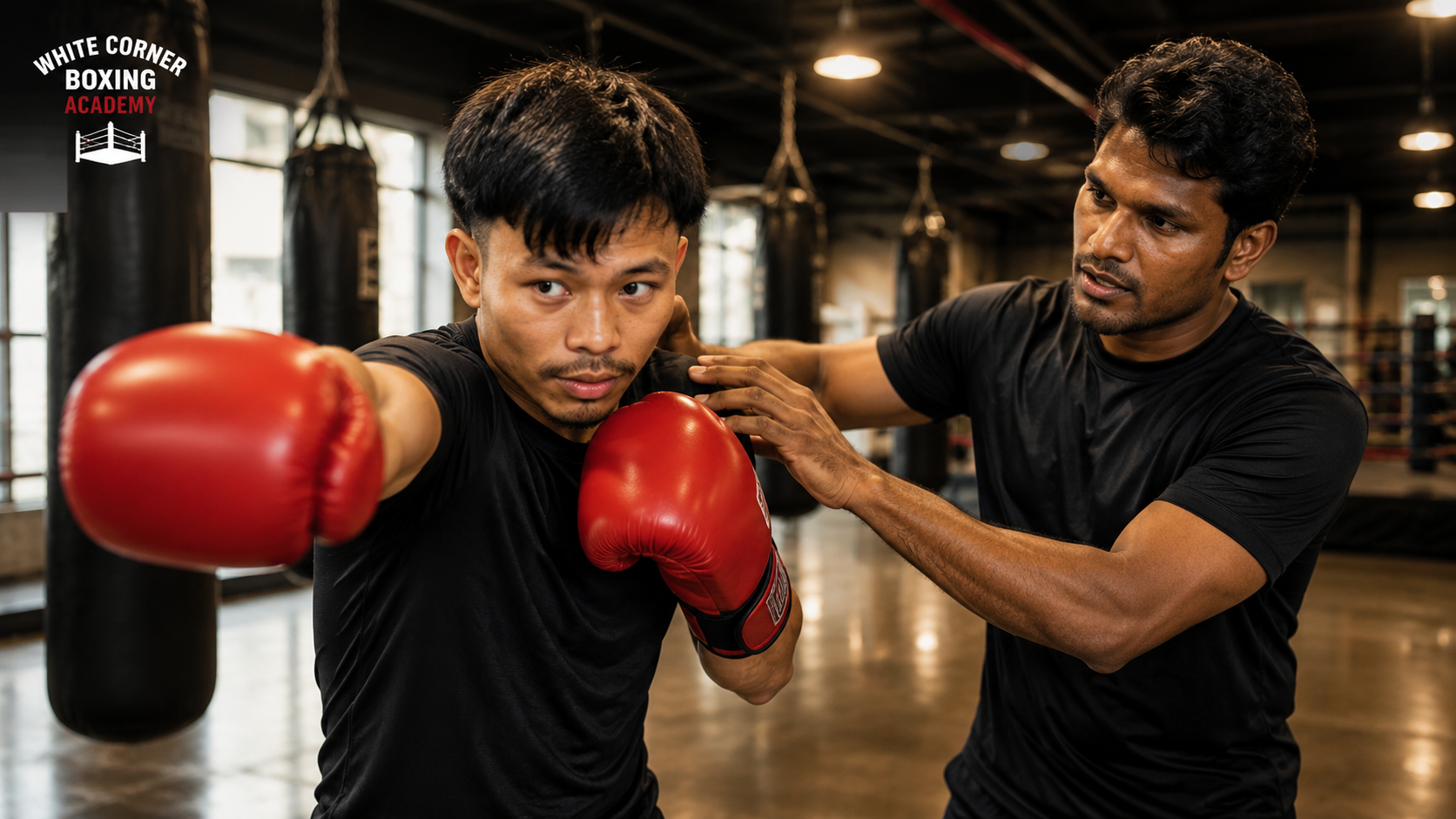
A good coach is doing three things at once while you train.
The first is catching what you can’t see. Your stance drifts when you get tired. Your guard drops after every cross. Your back foot lifts on hooks. You won’t notice any of it. The coach will, and it gets fixed in real time before muscle memory turns it into a habit you’ll spend months unlearning.
The second is sequencing your training. Footwork before power. Defence before offence. Jab before combinations. Self-taught boxers skip steps and plateau. Coached boxers keep climbing because they’re built in the right order, which is also how they sidestep the common beginner mistakes that quietly cap progress in the first six months.
The third is calibrating intensity. Knowing when to push you into a harder round, and when to ease off, is the part most beginners never notice. Overtraining is the fastest route to quitting. A coach reads your body language and adjusts the day’s plan around it.
Coaching shapes the mind, not just the punches
The physical side of boxing is the easy part to teach. The harder part, and the part that actually shapes champions, is mental.
Staying composed when someone’s coming forward. Keeping your hands up when you’re exhausted and every instinct says to drop them. Thinking clearly in round three when your lungs are on fire. None of that is natural. You build it slowly, under a coach who knows when to add pressure and when to let you find your feet.
This is why competitive boxers and nervous beginners actually need the same thing: someone watching closely enough to know what you can handle next. A good coach is half technician, half psychologist, reading your mindset as carefully as your footwork.
Why coach credentials matter
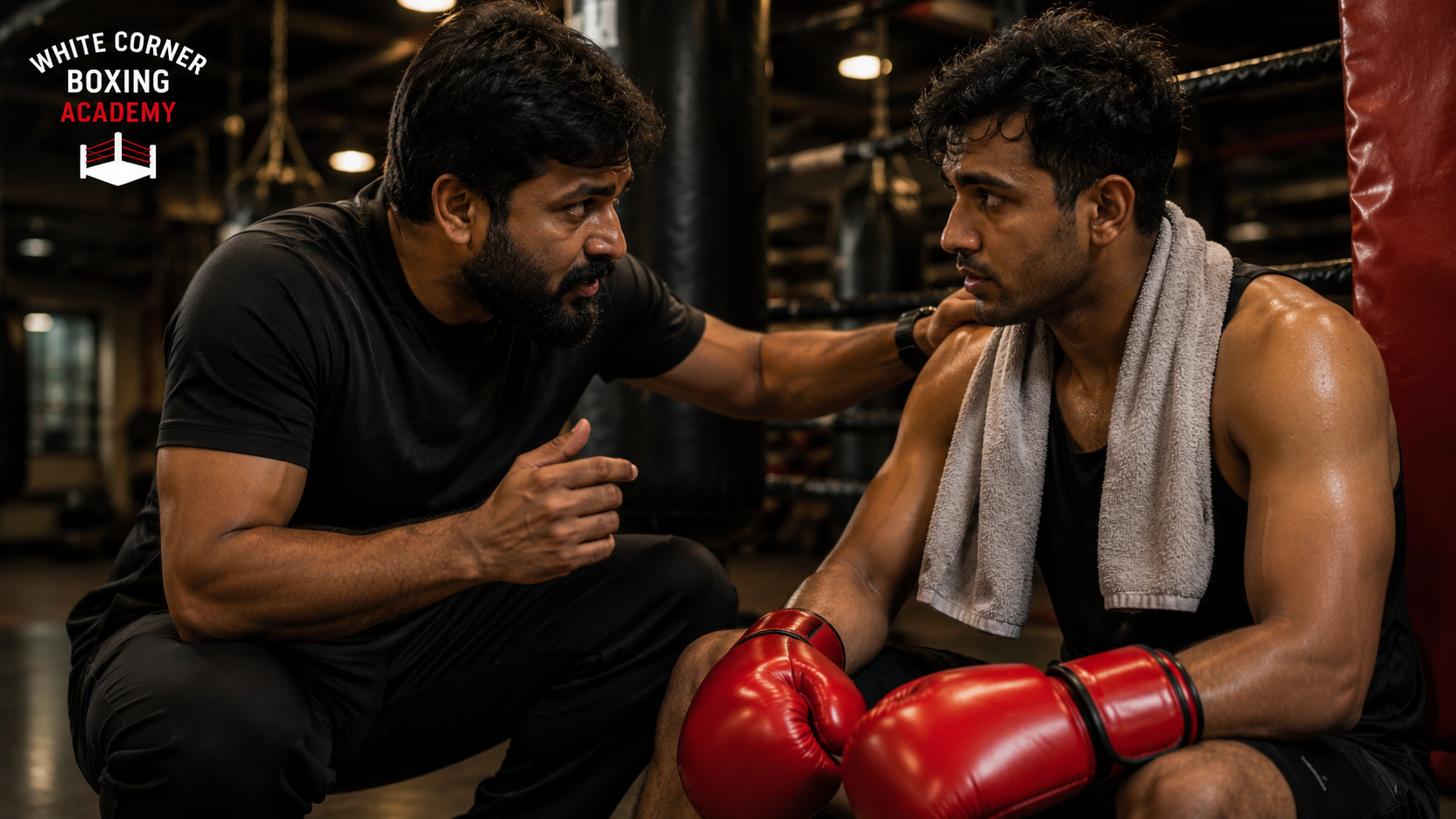
When you’re comparing boxing coaching in Bangalore, the first question isn’t about equipment or location. It’s who’s running the class.
Real coaches have either competed at a high level or trained boxers who have, and usually both. Those titles aren’t decoration. They translate directly into what a coach can spot and fix in your form.
At White Corner Boxing Academy, Founder and Head Coach Dipan Rai brings over 15 years of competitive boxing and 8 years of coaching, with more than 1,000 boxers trained, including state and national champions. He picked up the “Best Scientific Boxer” award at the Karnataka State Championship as a fighter himself. The wider team includes Khelo India Youth Games gold medallists and All India national-level competitors, and the academy is affiliated with the Karnataka Amateur Boxing Association.
One detail tells you more than the medals do: the academy runs a dedicated video analysis setup for breaking down technique. Coaching that records your rounds and reviews them frame by frame is coaching that takes your progress seriously. That’s rare, and it’s exactly the kind of thing worth looking for.
None of this guarantees a gym is right for you. It does mean the corrections you get in a beginner class come from people who’ve fought at the level they teach.
How to spot real coaching when you visit a gym
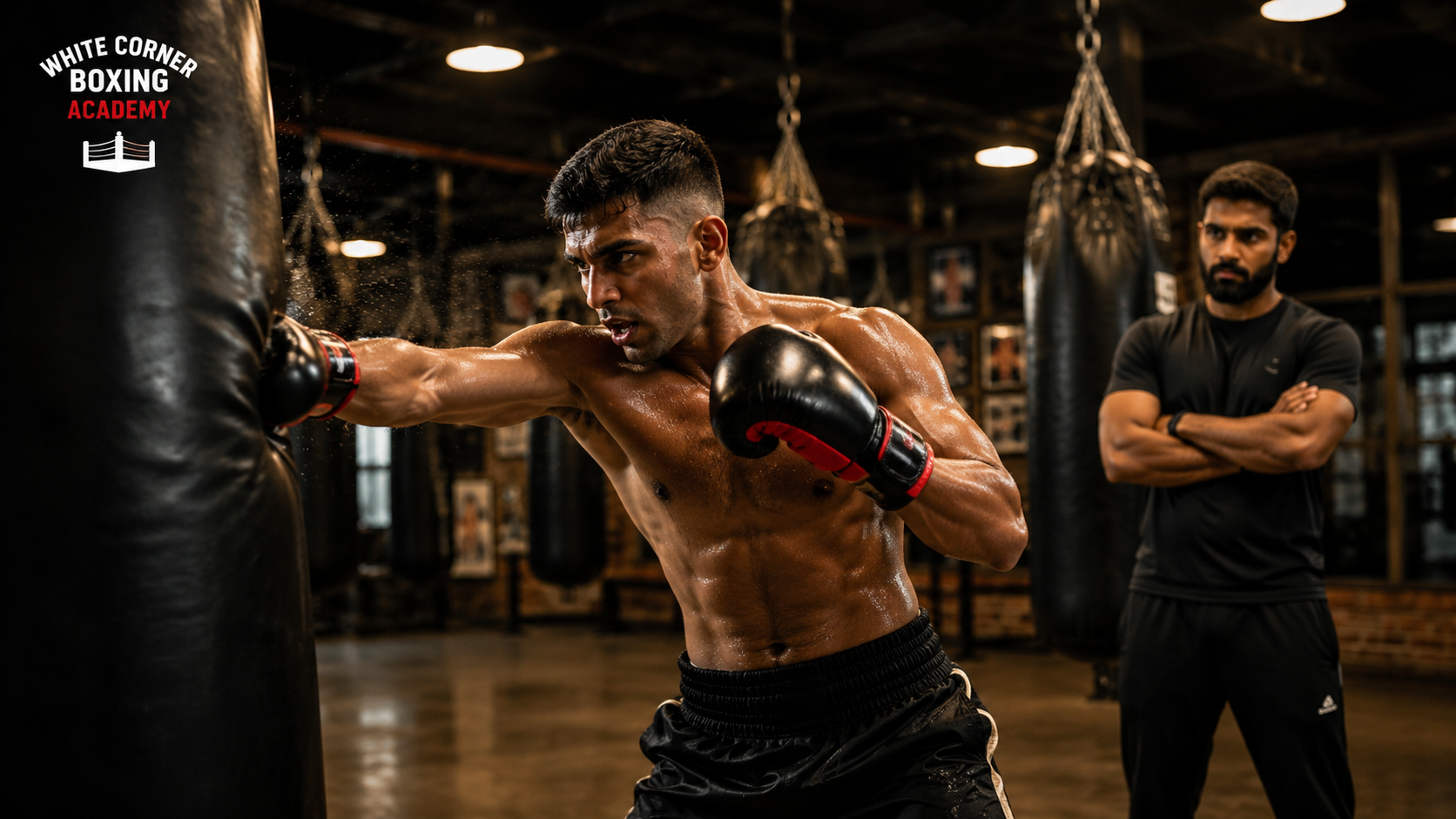
You don’t need to be an expert to judge a class. When you walk in for a trial, watch the coaching, not the equipment:
- Is the coach correcting form mid-class, or just calling combinations from the side?
- Do beginners get different instruction from intermediates, or is everyone running the same drill?
- Does the coach demonstrate technique properly, or only describe it?
- Is anyone tracking your progress between sessions, or are you on your own?
The equipment can be average. The coaching can’t. A great coach in a basic gym will take you further than a poor one in a fancy facility, every single time.
FAQs
Most beginners notice clear improvements in stance, footwork, and combinations within 4-6 weeks of training twice a week. Real technical fluency builds over 4-6 months. The gap shows up most around month two: self-taught boxers tend to plateau, while coached boxers keep climbing because their habits were built right from the start.
Yes, arguably more than competitors do. Untrained boxing leads to sloppy form, shoulder strain, and workouts that stop producing results. A coach keeps every session safe and effective, which is exactly what most fitness-focused beginners actually want, even if they don’t realise it on day one.
Founder Dipan Rai’s competitive background, plus a coaching team of state and national champions across two branches in HSR Layout and Koramangala. Coaches who’ve actually fought see things fitness trainers miss: small posture issues, weight transfer errors, defensive gaps. Add a dedicated video analysis setup, and that’s a real difference in how progress gets tracked.
Group classes are usually enough for the first 6-12 months, especially when the coach corrects you individually within the session. One-on-one helps later, when you’re refining specific weaknesses or preparing for competition. Most beginners overspend on private training too early. Start with group classes and add private sessions only when you hit a clear wall.
Yes, by a wide margin. YouTube shows you what good technique looks like. It can’t see your stance or fix your habits. A coach watches you train and corrects errors before they harden into muscle memory. That live feedback loop is the entire point of coaching, and no amount of self-study replaces it.