
Boxing Classes: The Fix for Office Posture and Low Energy
Eight hours at a desk does something specific to a body. Shoulders roll forward. The head drifts toward the monitor. Hip flexors shorten. Glutes switch off. By 4 PM, the coffee isn’t hitting the way it used to, the lower back has a familiar ache, and the idea of going to a gym after work sounds like one more thing to fail at.
This is the daily reality for most office workers in Bangalore — especially anyone working in IT, consulting, or startups. The slouch isn’t dramatic. It’s slow. You don’t see it happening, but it shows up in stiff necks on Monday morning and a foggy 4 PM that no productivity hack fixes.
Boxing classes in Bangalore fix a surprising amount of it. Not because boxing is trendy, but because of what the sport physically demands of your body for 60 minutes. This piece breaks down why.
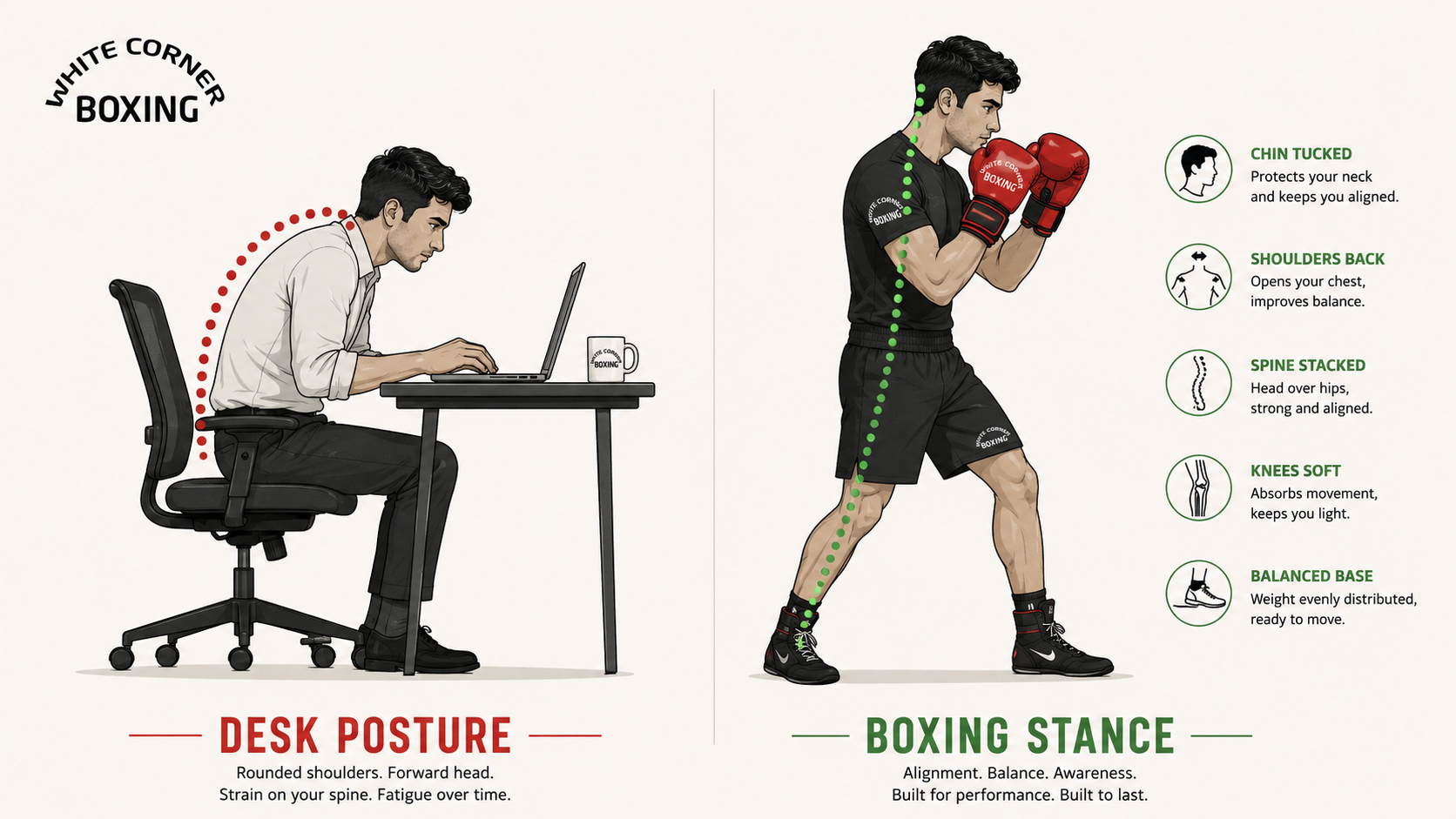
What sitting 8+ hours a day actually does to your body
Most desk-related damage isn’t injury. It’s adaptation. Your body gets very good at the position you spend the most time in. That position, for most office workers, is hunched.
The slouch you don’t notice anymore
Your chest muscles tighten. Your upper back muscles get long and weak. Your head sits forward of your shoulders instead of stacked over them. Every inch your head moves forward adds roughly 4-5 kg of load on your neck. By the end of a workweek, your traps are doing eight hours of overtime they were never designed for.
Why your energy crashes by 4 PM
Sitting isn’t just bad for posture. It’s bad for circulation, lymphatic flow, and the small postural muscles that should be firing all day. When those switch off, your body runs on shallow breathing, low blood flow, and minimal movement. The 4 PM crash is partly a sugar dip, but it’s mostly that you’ve been physically idle for hours.
A workout that re-engages everything the chair turned off is the fix. Most workouts don’t do that. Boxing does — which is one reason boxing for fitness in Bangalore has taken off with working professionals over the last few years.
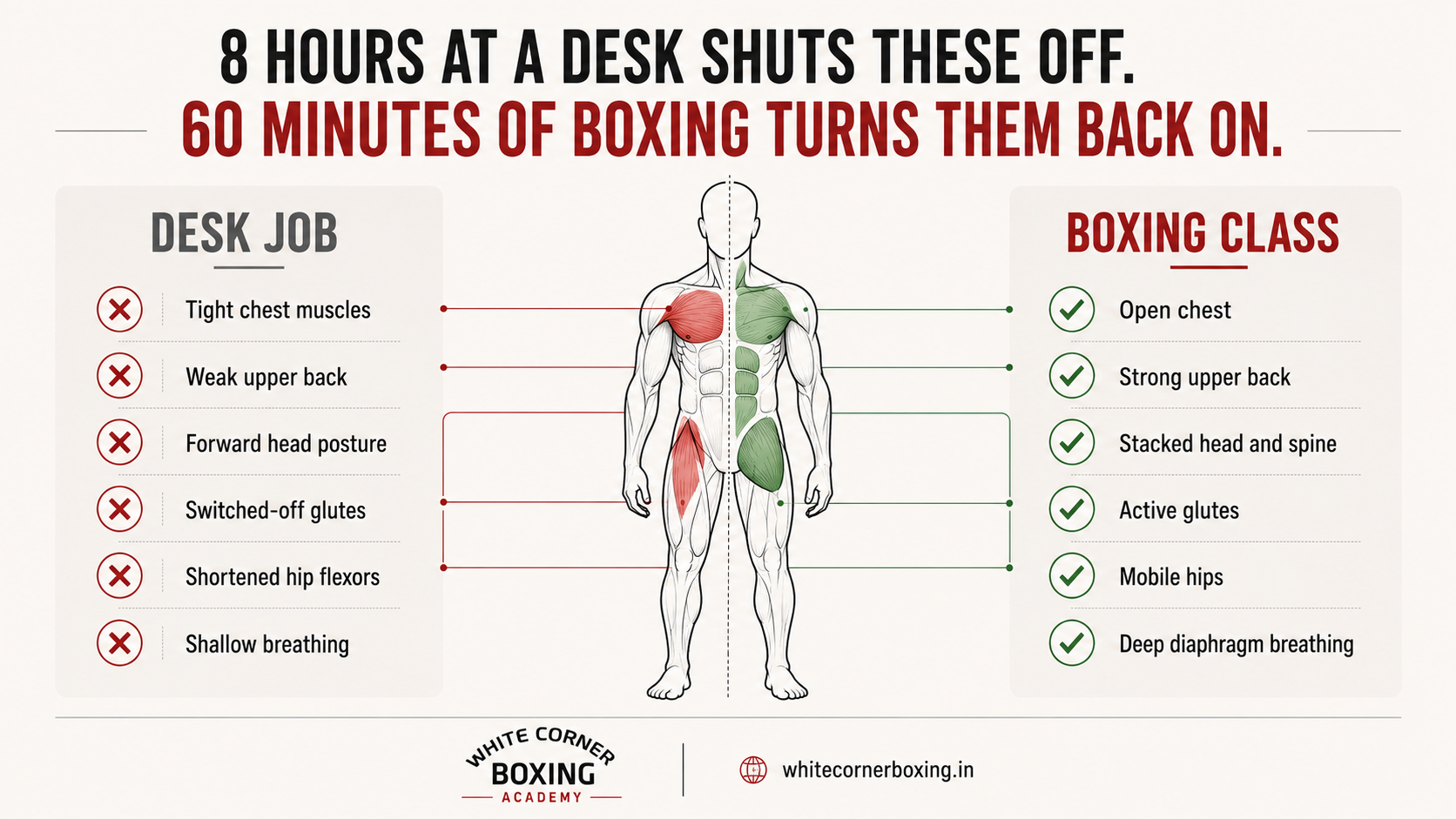
Why boxing is built for desk workers
Boxing wasn’t designed as office-recovery training, but it works that way by accident. Here’s what’s actually happening when you train.
The boxing stance is a posture reset
The first thing a coach corrects in a beginner class is your stance. Feet shoulder-width, knees soft, hips square, ribs down, chin tucked, hands up, shoulders relaxed but engaged. Hold that for a few rounds and your body remembers what neutral spine feels like. Most people haven’t been in that position for years.
You’re not stretching. You’re practising the opposite of the slouch, under load, for 45-60 minutes. That’s far more effective than the five minutes of desk stretches you keep meaning to do.
It hits the muscles your chair turns off
Every punch comes from the hips and the back, not the arm. A proper cross rotates the back foot, fires the glute, twists the core, and drives through the shoulder blade. That sequence wakes up the exact chain — glutes, obliques, mid-back, rear delts — that goes quiet during a workday.
Add the footwork, and you’ve also moved laterally, backward, and forward in patterns your office floor never asks for. Hip mobility improves. Ankles get stronger. The body remembers it’s a body. This is also why boxing circuit training and conditioning work so well alongside skill drills — they reinforce the same posterior chain office work disables.
60 minutes that fix what coffee can’t
A standard class is intense enough to flood the system with adrenaline and endorphins. That’s not motivational language — it’s what happens. You walk in foggy and stiff. You walk out clear-headed and looser. The energy boost isn’t temporary in the way caffeine is. Sleep improves. The next morning starts better. Within a couple of weeks, the 4 PM crash starts to soften.
This is the part most desk workers don’t expect: the recovery from a hard class often gives you more usable energy than skipping the workout would have. If you’ve ever wondered why boxing classes feel so good after work, this is the mechanism.
What a class actually looks like
If you’ve never trained, the picture in your head is probably wrong. There’s no sparring on day one. Nobody throws you in a ring.
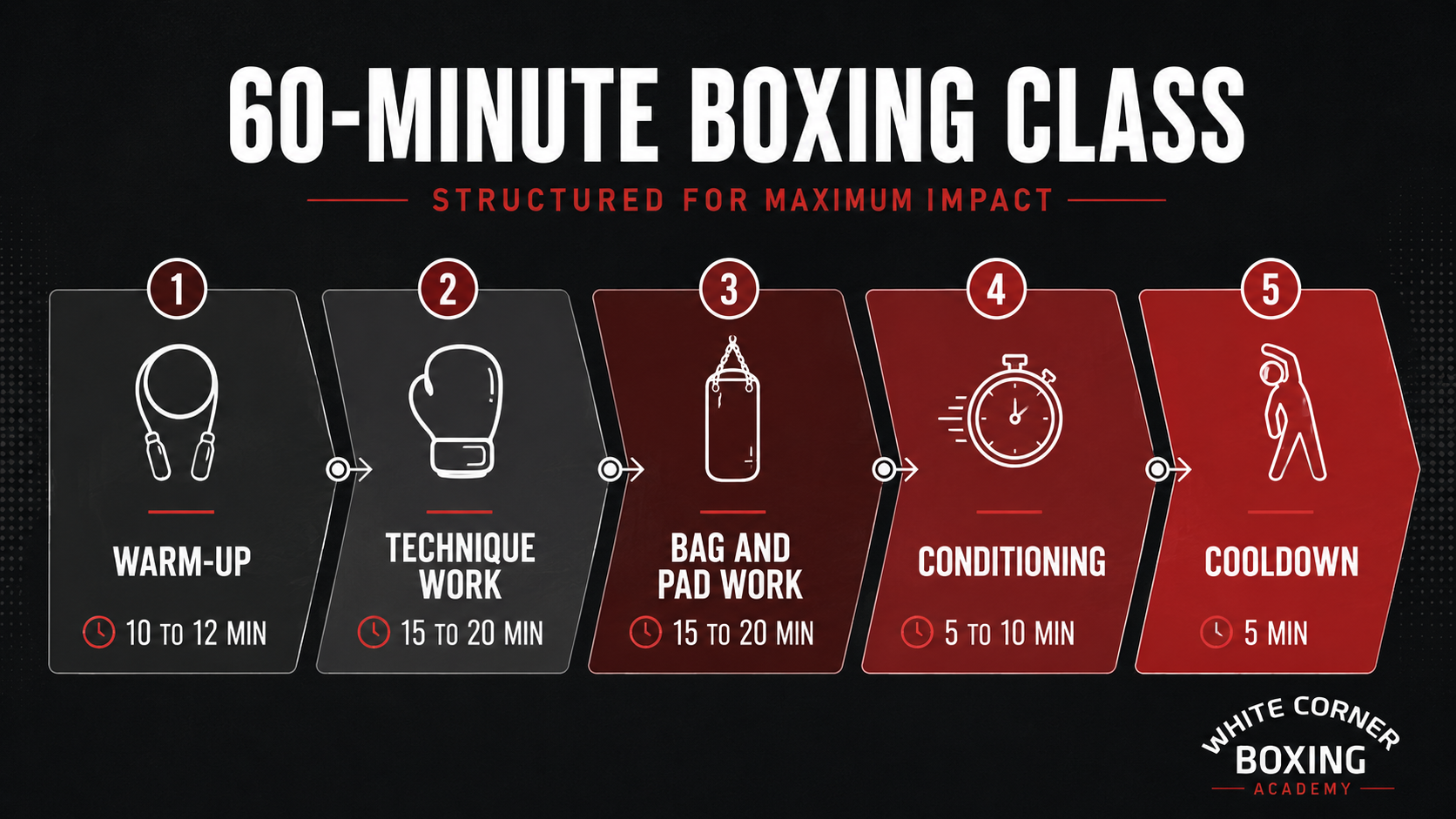
A typical session at White Corner Boxing Academy runs in this rough order:
- Warm-up (10-12 min): Skipping, mobility drills, dynamic stretches. Mostly to get blood moving and joints ready.
- Technique work (15-20 min): Stance, footwork, basic punches — jab, cross, hook, uppercut. Coaches walk around correcting.
- Bag work or pad work (15-20 min): You throw combinations on heavy bags or with a trainer holding focus mitts. This is where the cardio hits.
- Conditioning (5-10 min): Core, plyometrics, or circuit-style finishers.
- Cooldown: Stretching, mobility, breathing.
There’s no music-pumped fake intensity. Nobody’s yelling at you. Just structured work, a coach watching your form, and a clear progression session to session. If you want a fuller breakdown of what happens when you start boxing, we’ve covered the first few weeks in detail elsewhere.
How to start if you’ve never thrown a punch
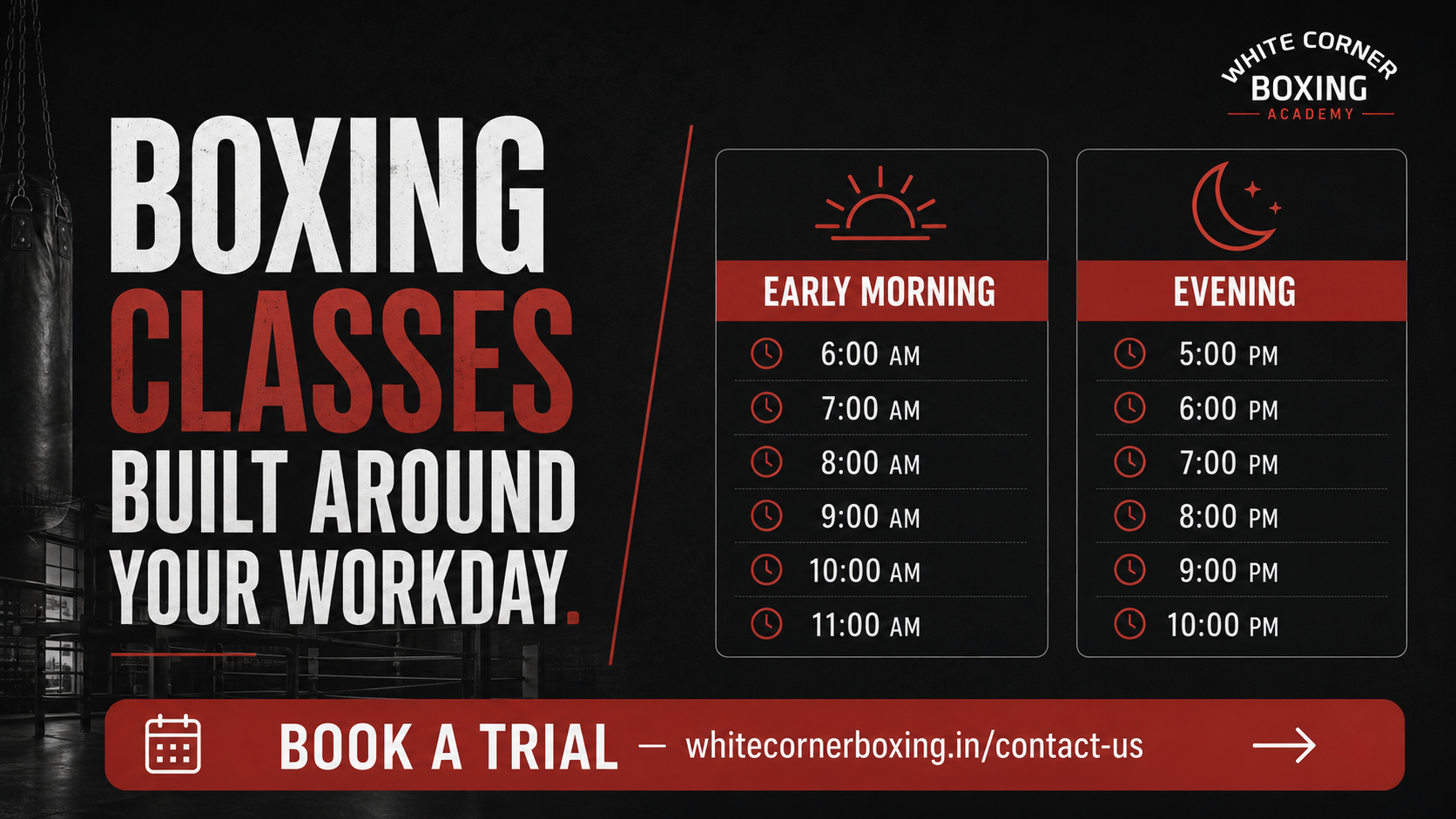
Don’t buy gloves before your first class. Most gyms, including ours, provide everything you need for a trial — gloves, wraps, bag space. All you need is workout clothes and a water bottle.
A few practical things to know going in:
- Eat something light 60-90 minutes before. Banana, toast, a handful of nuts. Don’t train on a heavy meal or empty.
- Skip the ego. The first class is for learning, not for being good. Coaches care about whether you’ll show up next week, not whether you punch hard.
- Expect to be sore in places you forgot you had muscles. Mid-back, obliques, calves, glutes. That’s the chair muscles waking up.
- Show up twice a week minimum for the first month. Once a week is too easy to skip; three is great if your schedule allows.
It also helps to know what beginners tend to get wrong — we’ve documented the common boxing mistakes beginners make so you can avoid the obvious ones in your first month.