
Benefits of Shadow Boxing
Shadow boxing benefits go far beyond looking the part in front of a mirror. It’s the simplest tool in boxing, no gloves, no bag, no partner, and also one of the most underrated. Done with intent, it sharpens technique, builds conditioning, and trains your brain in ways bag work alone can’t. Done lazily, it’s just waving your arms in the air.
Here’s a clear breakdown of the shadow boxing benefits that matter, and how to make sure you’re actually getting them instead of wasting the round.
The real shadow boxing benefits
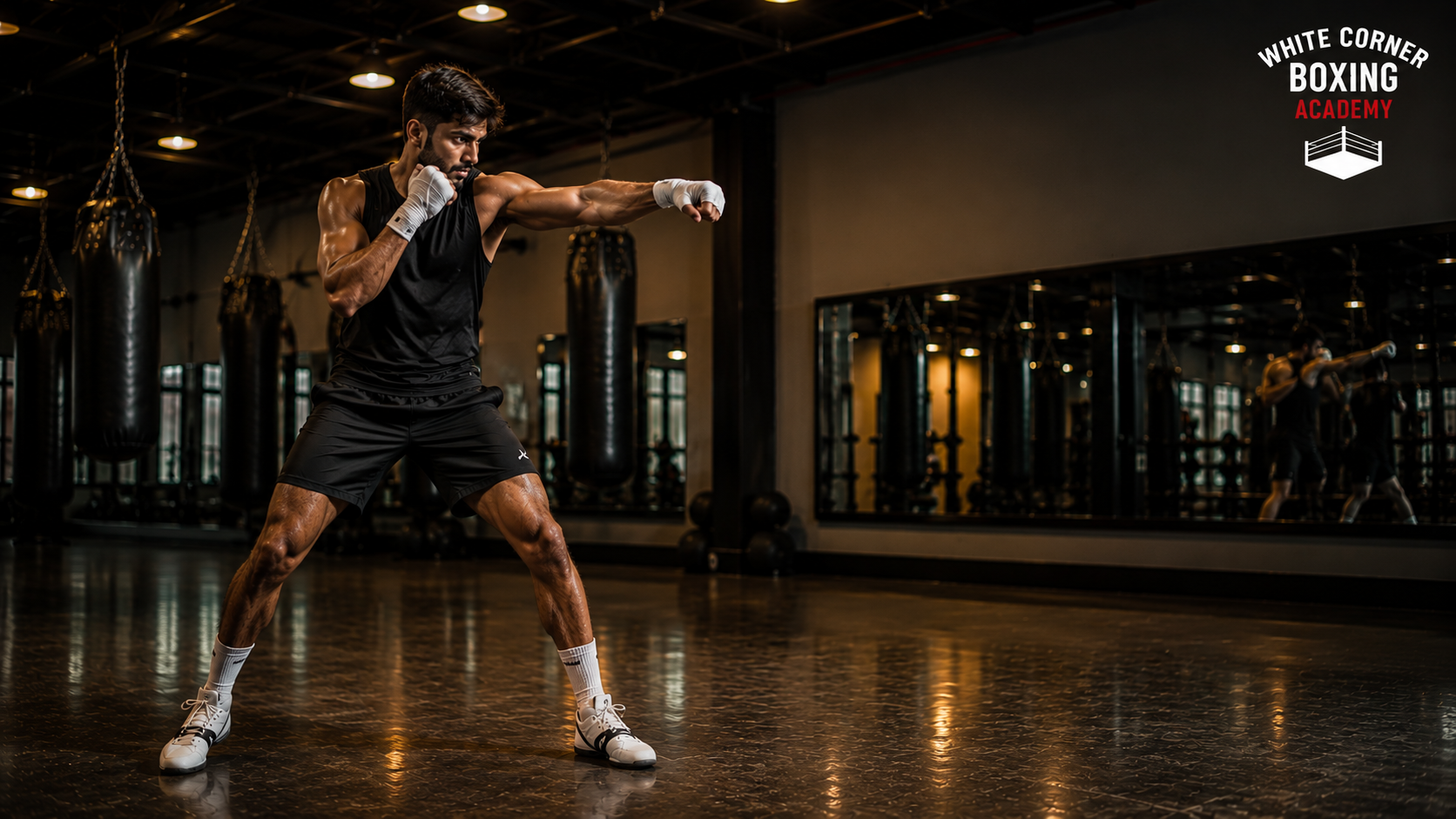
Technique without distraction
When you hit a bag, part of your attention goes to the impact. When you spar, most of it goes to not getting hit. Shadow boxing strips all that away. There’s nothing to react to, so you can focus entirely on how you move.
That’s why coaches use it to clean up form. You can slow a combination down, feel where your weight sits, and check that your hand returns to guard after every punch. It’s the closest thing boxing has to practising in a lab.
Footwork and movement
Most beginners punch fine and move terribly. Shadow boxing forces you to deal with your feet, because there’s no bag anchoring you to one spot. You step in, pivot out, circle, reset. Over time your movement stops being an afterthought and starts feeling natural, which is exactly when boxing begins to click.
Conditioning you can’t fake
A few honest rounds will have you breathing hard. Kept at a real pace, shadow boxing builds cardio, burns calories, and trains the stop-start endurance the sport demands. It’s a big reason it shows up in nearly every warm-up and home workout, and why it pairs so well with boxing for fitness.
Muscle memory that carries over
Boxing runs on automatic responses. You don’t have time to think about throwing a counter mid-exchange, it has to be wired in. Shadow boxing is repetition without the fatigue of impact, so you can drill the same combination dozens of times and groove it into memory. When the moment comes on the bag or in sparring, the movement is already there.
Anywhere, anytime, no excuses
This is the practical one. You need zero equipment and about two square metres of space. A hotel room, a terrace, a corner of your bedroom, it all works. On days you can’t make it to the gym, a few rounds keep your skills sharp and your conditioning ticking over.
Mental rehearsal
This is the benefit most people skip. Good shadow boxing isn’t punching air, it’s fighting an imaginary opponent. You picture their jab, slip it, counter. You create angles and react to threats that aren’t there. That rehearsal builds timing and ring IQ, the part of boxing that separates someone who knows combinations from someone who can actually use them.
How to shadow box properly
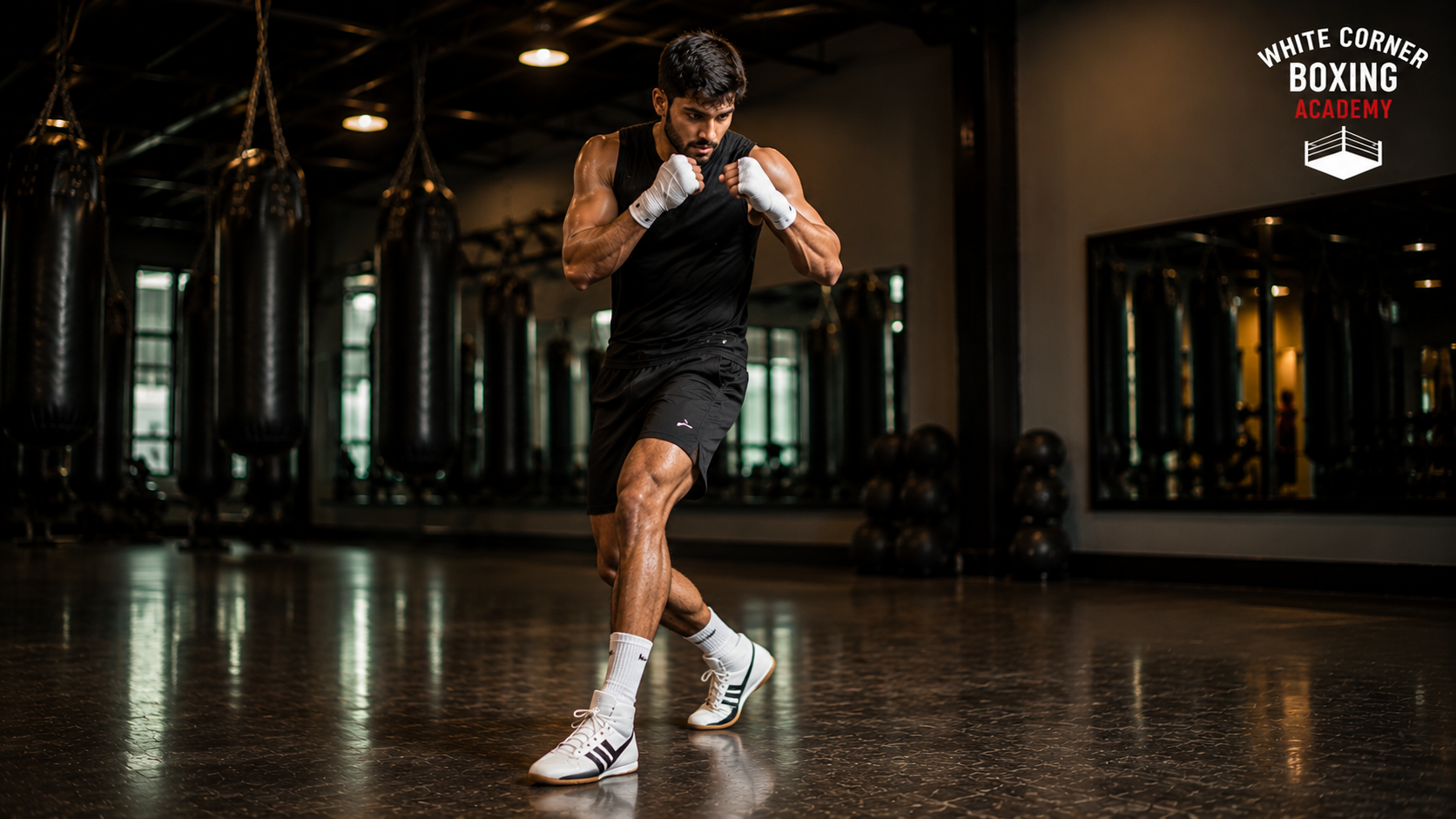
The shadow boxing benefits only show up if you do it with intent. A few rules keep you honest:
- Stay in your stance. Hands up, chin tucked, the same guard you’d hold in a real round.
- Picture an opponent. Give yourself something to hit, slip, and counter. Don’t just flow through motions.
- Move your feet. Every combination should involve a step, a pivot, or an angle.
- Throw real punches. Snap them back to guard. No lazy, dangling arms.
- Work in rounds. Three minutes on, one off, so your conditioning gets the work too.
The mistakes that waste the round
Most people get little out of shadow boxing because they treat it as filler. They drop their hands, plant their feet, stare into space, and go through the motions until the timer ends. If your shadow boxing looks nothing like how you’d actually fight, it’s not building the habits you want, and careless reps quietly groove the same beginner mistakes you’re trying to avoid. Train it like it’s real, and it pays you back like it’s real.
Yes, if you do it with intent. Several honest rounds will raise your heart rate, build conditioning, and burn calories. It won’t fully replace heavy bag work or sparring for power and timing, but as a standalone cardio and technique session, especially at home, it’s genuinely effective.
Start with 3-5 rounds of three minutes, with a minute of rest between them. That’s enough to build conditioning and drill technique without your form falling apart from fatigue. As you improve, add rounds or raise the pace. Quality beats quantity, since sloppy extra rounds just groove bad habits.
A mirror helps you check your guard, stance, and punch mechanics, so it’s useful for beginners cleaning up form. Don’t rely on it completely, though. Part of the value is visualizing an opponent and reacting, which you can’t do while watching yourself. Mix both.
Definitely. It builds muscle memory, footwork, and timing that carry directly into bag work and sparring. Many coaches rate it one of the most important drills in the sport. The catch is intent. Shadow boxing done carelessly builds careless habits, while focused practice sharpens everything.
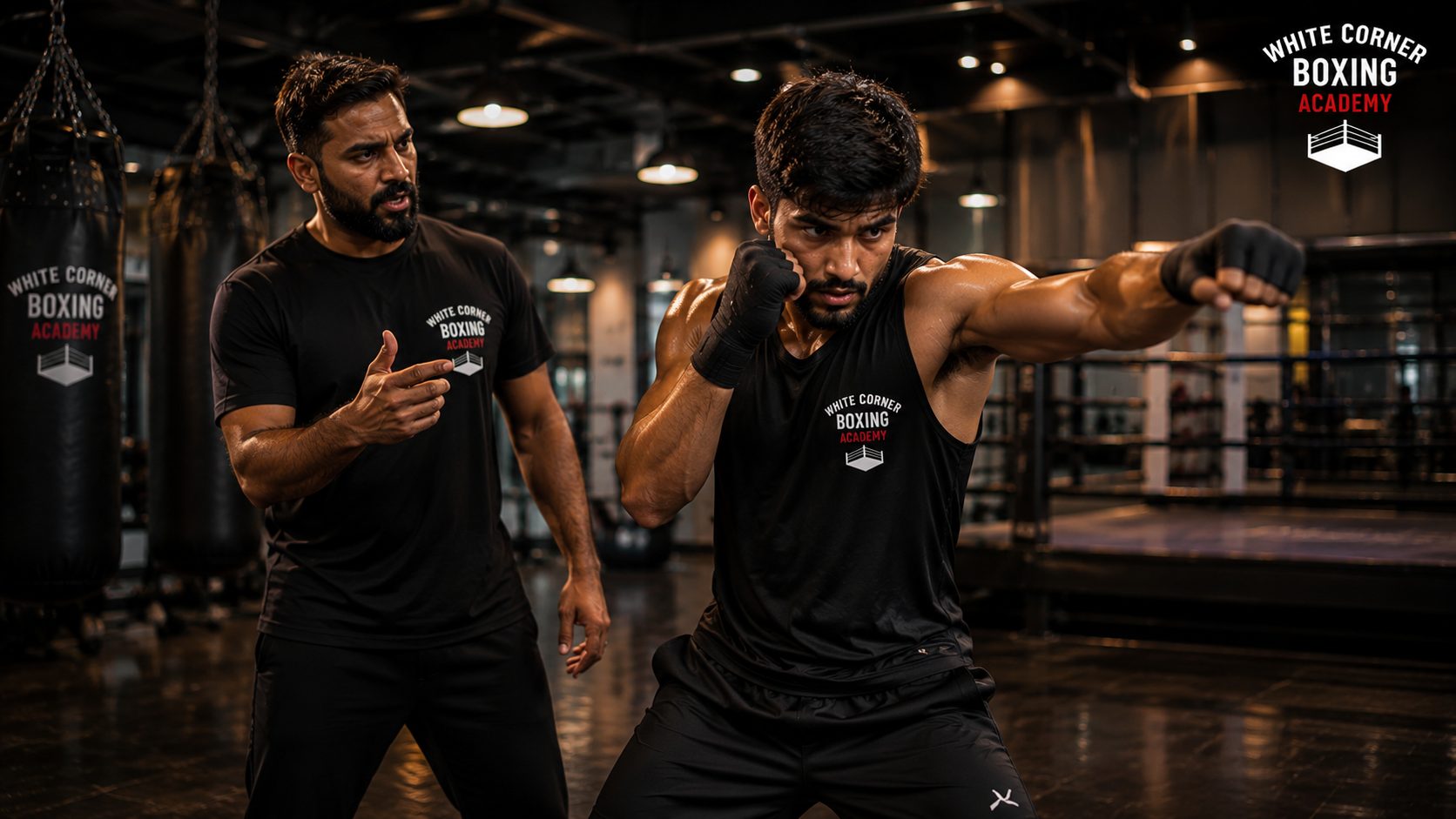
More than almost anyone. Beginners are forming the habits that shape their boxing for years. Shadow boxing lets beginners drill stance, guard, and combinations slowly and correctly, without the pressure of a bag or partner. A coach watching early on can fix issues before they harden.